Call Us
+91 965-437-5133
+91 965-475-5133
Email Us
ieffnepal@gmail.com
iefffestivals@gmail.com
VENUE
KATHMANDU
NEPAL
The Kathmandu Valley is home to seven UNESCO World Heritage Sites, representing over 2,000 years of Nepal's cultural, religious, and architectural heritage. A full-day UNESCO Heritage Tour takes visitors through magnificent royal palaces, medieval cities, sacred Hindu temples, and iconic Buddhist stupas, offering a fascinating glimpse into Nepal's rich history and living traditions.
Although all seven monuments are UNESCO World Heritage Sites, a one-day tour typically covers the six most popular attractions, providing a perfect blend of history, spirituality, architecture, and local culture.
DAY-1 : KATHMANDU
|
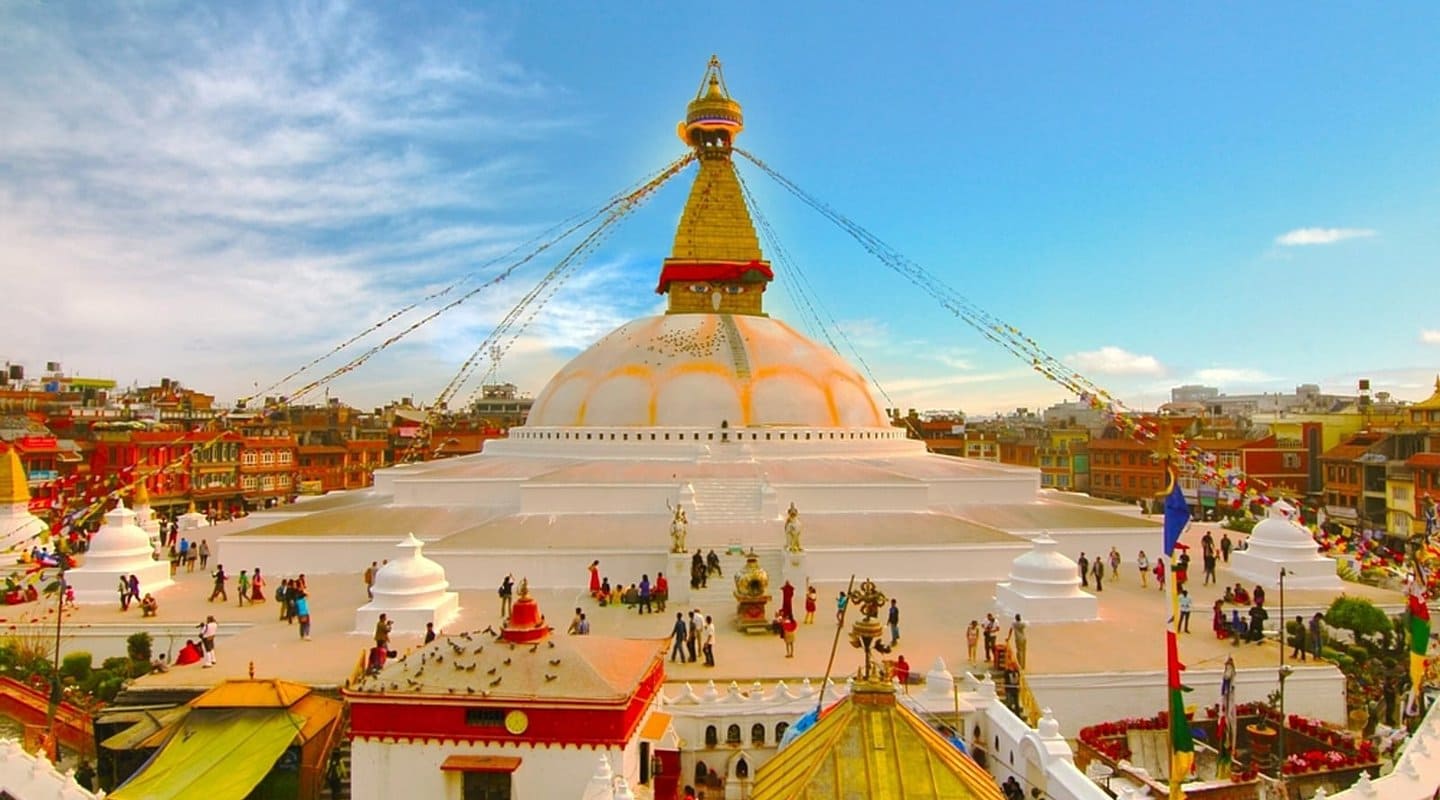
• Kathmandu Durbar Square: 1000 NPRs • Boudhanath Stupa: 250 NPRs • Pashupatinath Temple: 1000NPRs • Langtang National Park: 3000 NPRs • Hanuman dhoka: 1000 NPRs • Bauddha Stupa: 400 NPRs • Swayambhu Stupa: 200 NPRs • Garden of Dreams: 400 NPRs • Bhaktapur Durbar Square : 1500 NPRs • Changunarayan Temple :300 NPRs
• The participant has to follow the dress code while taking entry in to some of the sacred temples. (Proper dressing with head cover).
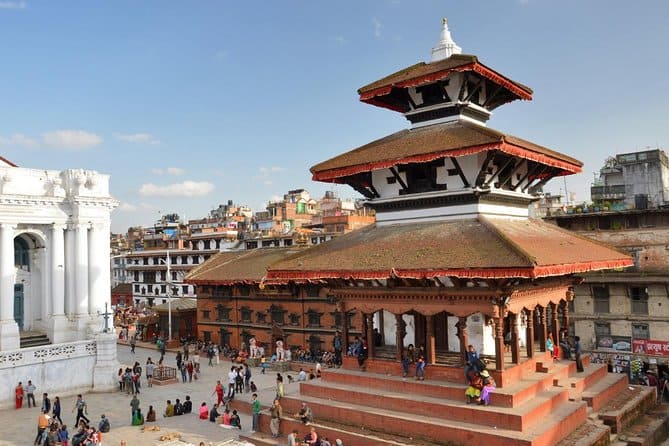
Kathmandu Durbar Square, also known as Hanuman Dhoka Durbar Square, served as the royal palace of the Malla and Shah kings for centuries. Located in the heart of old Kathmandu, this magnificent complex is filled with intricately carved wooden temples, beautiful courtyards, ancient shrines, and historic monuments that reflect Nepal's rich artistic heritage.
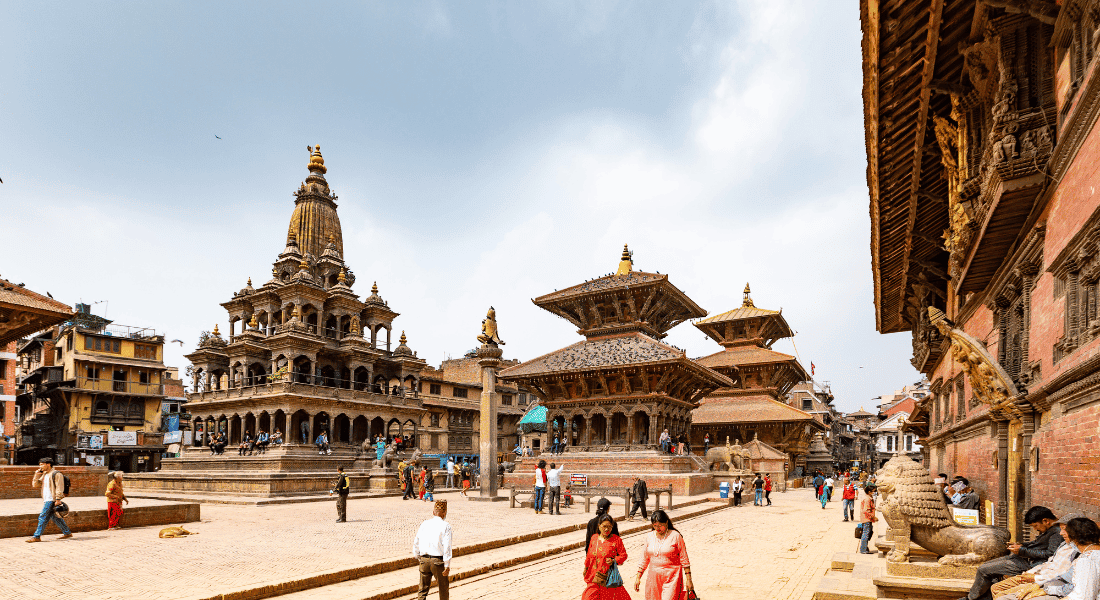
Located in Lalitpur, Patan Durbar Square is renowned as one of the finest examples of Newari craftsmanship in Nepal. The square showcases magnificent temples, artistic courtyards, stone sculptures, traditional fountains, and beautifully decorated palace buildings.
Patan has long been celebrated as Nepal's centre of arts and handicrafts. Visitors can witness traditional metalworkers, woodcarvers, and artisans continuing centuries-old craftsmanship.
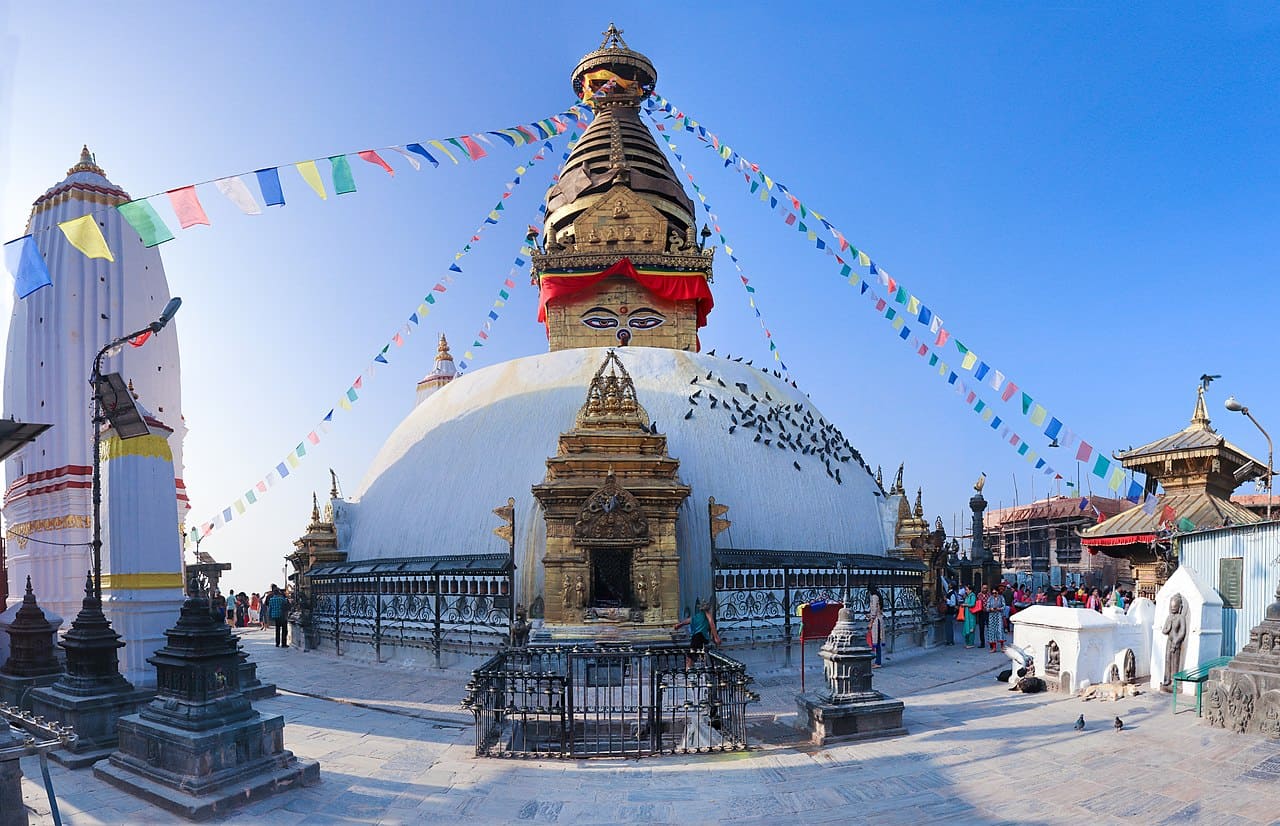
Swayambhunath Temple in Kathmandu is also popularly known as the ‘Monkey Temple’ as there are many monkeys around the temple. It is situated northwest of the Kathmandu Valley and sits at the top of a hill, offering a beautiful panoramic view of the entire Kathmandu city to the visitors. The place is embraced with peace and prayers, and one can attain harmony here. Kathmandu city’s glory started from this point.
The place is famous for the inner peace and harmony which the visitors obtain when they pay a visit to this place. Swayambhunath Temple is considered to be one of the holiest Buddhist Chaityas in Nepal. This stupa is one of the oldest temples in Nepal and has many shrines and monasteries present inside.
Swayambhu in the English language means "self-existent one". It has a steep pathway of stone steps leading up to the shrine. Swayambhunath Temple, Kathmandu Nepal is among the must-visit places in Kathmandu city and witnesses large footfall throughout the year. The Tibetan name of the place means “Sublime Trees” due to the presence of a variety of trees at the hilltop.
Swayambhunath Temple, Kathmandu Nepal was built by King Manadeva and was later developed into a centre of Buddhism by the 13th century. According to some sayings, it is believed that the Swayambhunath Temple evolved on its own during the creation of the valley, out of a primordial lake dating back to more than 2000 years ago.
Legends believe that Swayambhunath Temple was evolved from a lotus flower which blooms at the centre of a lake which was spread across the Kathmandu Valley. A huge image of the Sakyamuni Buddha in Nepal is present on the western boundary pedestal of the temple. A temple of Manjusri or Saraswati - the Goddess of Learning is situated behind the hilltop. The base is covered with prayer wheels. Devotees move around the temple all day.
Major attractions which can be witnessed in the Swayambhunath Temple, Kathmandu is the large gold-plated Vajra ‘thunderbolt’ which has been placed on the east side of the stupa. The Sakyamuni Buddha statue and the Sleeping Buddha statue is a delightful site.
The Dewa Dharma Monastery is famous for the bronze statue of Buddha, and the place also has many traditional Tibetan paintings. The Swayambhunath Temple is dedicated to The Goddess of all children, Harati. This temple is very beautiful with enchanting arrangement amidst nature and placed on a hilltop.
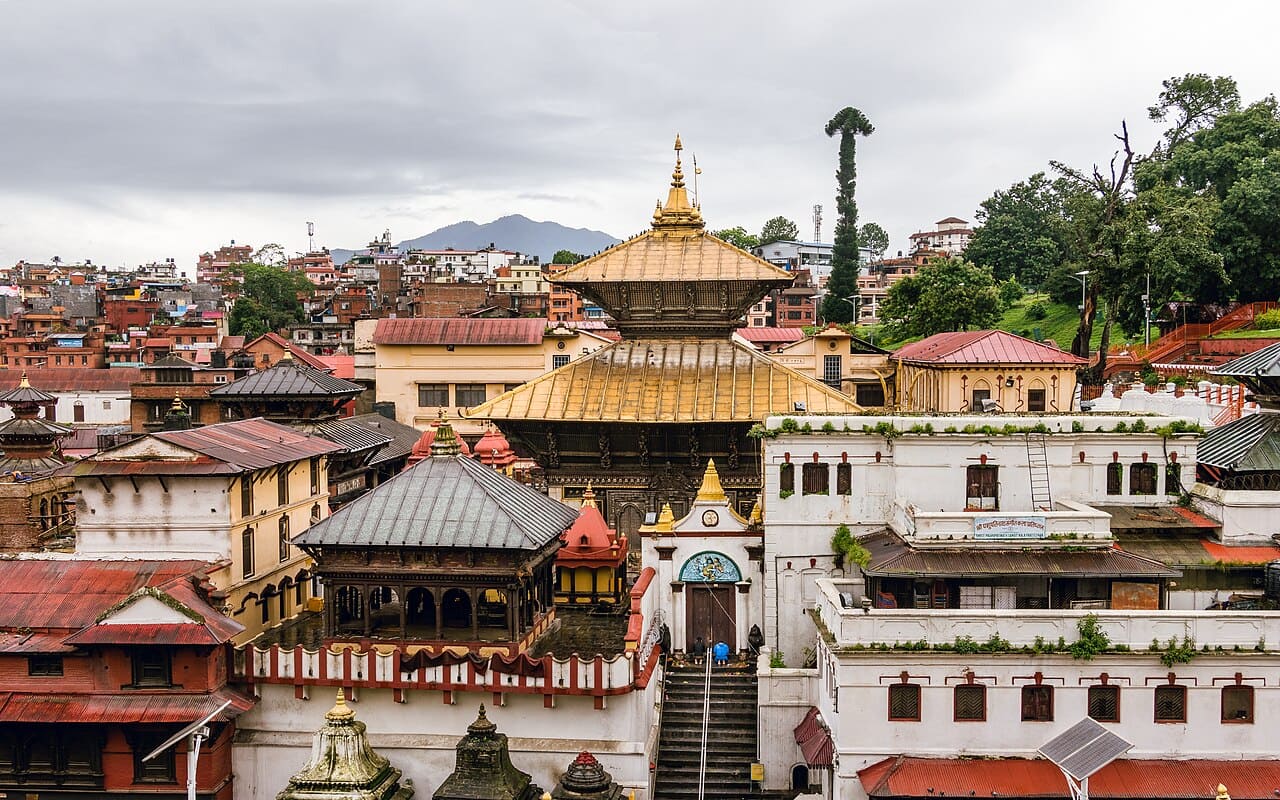
Pashupatinath Temple, located on the banks of Bagmati River, is one of the most important shrines of Shiva – not only in Nepal but in the entire world. This is the abode of Nepal’s national deity, Pashupatinath manifestation of Lord Shiva, where he is the father of all living beings in the cosmos. This is not a single monument but a sprawling collection of temples, shrines, ashrams and occasional rock inscriptions – all packed together into one complex.
The main temple which houses Lord Pashupatinath Mandir in Nepal has a pagoda style gilded roof, sides covered in silver and the rest of it made of well-carved wood. The sacred Shiva lingam resides inside, guarded by his faithful servant Nandi Bull. Shiva’s consort Goddess Sati has her own temple called Guheshwori.
This is one of those temple precincts where cremations happen inside the premises. By the holy River Bagmati, Hindu people perform the final rituals for their deceased. Pashupatinath Temple is one of the 7 UNESCO World Heritage sites of Kathmandu Valley. It is said that the 12 Jyotirlingas of India make up the body of Lord Shiva, while Pashupatinath Temple in Nepal is the head. One cannot help but feel mesmerised by an expanse of the temple complex and the spiritual atmosphere that hovers over the place.
Like every Hindu temple, Pashupatinath Nepal too has its own share of history and legends. Recorded history says that the temple as it stands today was constructed by Lichhavi King Shupushpa in the 5th century after the old temple was ruined by termites. Over the years, multiple new shrines were added, including a Vishnu and Rama temple. But the actual origin is lost in myths and legends.
Some believe the Shiva lingam of Pashupatinath Kathmandu was self-manifested. Other believe that Lord Shiva himself descended upon the valley in the form of an animal and he liked this place so much that he blessed it with his ‘Lord of all animals’ form.
Kathmandu Valley is the heartbeat of Nepal and one of the most visited destinations all along the Himalayas. Located at the momentous crossroads of all the ancient civilizations of Asia, Kathmandu Valley has always been the silent spectator of the regimes that rose and fell in China over the head and India down below. But it had its own share of history as well.
History of Kathmandu Valley starts with the native residents, the Newars. One can find a reminiscence of Newari architecture, culture, traditions and cuisines all around their Kathmandu Valley tour. Afterwards, it changed hands a few times, but mostly between the Mallas and the Gorkhas. The latter was responsible for unifying Nepal and creating a modern state.
Kathmandu valley of Nepal is by far the most eventful place in the country. Everything worth mentioning takes place around here. All the best places to visit in Nepal are also in this valley. To give an idea, this place itself has seven UNESCO World Heritage sites, all of which are very popular for Kathmandu Valley sightseeing.
The holy and sacred Shiva shrine, Pashupatinath Temple is situated on the banks of River Bagmati and is only 3 km away from the airport. Changu Narayan, dedicated to Lord Vishnu, is the other heritage site among the temples of Kathmandu Valley. Swayambhunath Stupa and Boudha Stupa represent Buddhism in the list. The remaining three places are taken up by the Durbar Squares.
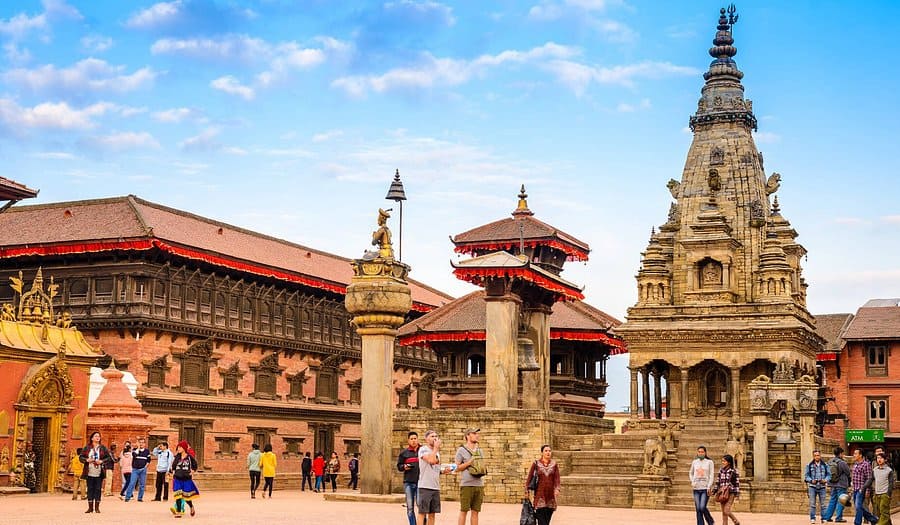
Durbar squares are the city centre locations of Nepalese cities, where most of the urban thoroughfares meet, and points of interests are located. Kathmandu, Bhaktapur and Patan Durbar Squares are three really impressive locations to explore.
There are dozens of other temples and shrines of both Buddhist and Hindu faiths, scattered all around the districts in Kathmandu Valley for one to explore. For the adventurers at heart, there are short trails for Kathmandu Valley trekking to places like Nagarkot, Dhulikhel or Namo Buddha
Kopan Monastery is an educational and spiritual institution, located on the outskirts of Kathmandu city near the Boudhanath Stupa in the valley region. Although it looks quite antique, its foundation was laid only in the last century. Lamas Thubten Yeshe and Thubten Zopa Rinpoche bought the land on which Kopan Monastery stands from Nepal’s royal astrologer and set up this institution.
Kopan Monastery in Kathmandu is a member of the Foundation for the Preservation of the Mahayana Tradition, or in short FPMT. It is an international network of dharma centres based on Gelugpa faith, introduced into Tibetan Buddhism by Je Tsongkhapa in the late 14th century. Kopan Monastery once used to be the headquarters for FPMT.
Now it is a nunnery, a study centre and a monastic shrine which draws a crowd considerably. Kopan Monastery Kathmandu Nepal has become quite a popular destination for foreigners, who are looking for a spiritual retreat and want to explore the famous Oriental faith of mystique lands of Tibet.
FPMT students can stay here and explore the depths of Buddhism with the help of the different courses and retreats available. ‘Discover Buddhism’ is the all year-long course, while ‘The Next Step’ is a more in-depth, intense study of the religion and Kopan Monastery meditation. There is a daily 90-min Dharma talk session scheduled from Monday to Friday at 10:30 am.
The Group and Private Kopan Monastery Retreat options are preferred by many for a peaceful week, delving deep into their own consciousness. The courses here are taught mostly based on the traditional Lam Rim – the holy text of Tibetan Buddhism showing the path towards enlightenment as told by Buddha. The texts are accompanied by informal conversations and guided meditation.
Less than an hour’s drive away from Kathmandu city, Chandragiri hilltop is a mesmerising tourist location, enriched with equal amounts of natural beauty and cultural significance. The view of the entire Kathmandu valley can be seen from up there. It is said to be so beautiful that when King Ranjit Malla had to leave his kingdom defeated, he took one last glance at it from here and broke down into tears.
The great Gorkhali king Prithvi Narayan Shah also decided to annexe the valley after seeing it from Chandragiri hills. At 2500 km on the top of Chandragiri Nepal, the entire stretch of all the great Himalayan mountain massifs can be seen. For an even better glimpse, there is a view tower with binoculars.
From west to east runs the great Annapurna, Nepal’s favourite trekking destination Mount Manaslu, the mighty Ganesh Himal and then the magnificent Langtang Himal. With a clear sky, one might even catch a glimpse of Mount Everest.
One of the main attractions here is the cable ride up the slope. From the foot of the hill, the Chandragiri cable cars take tourists up to the top smoothly. The spectacular 360°C view of the valley and the mountains are absolutely worth the money spent on the ticket. The journey is only of 10 minutes and covers an ascent of 2.5 km.
At the top of Chandragiri hill Nepal, the tourists are greeted with the Shiva shrine of Bhaleshwar Mahadev. This temple is said to have been built over goddess Sati’s forehead. It was part of a very important chapter in Hindu mythology when a bereaved Lord Shiva roamed all around the universe with his consort’s corpse in arms.
This temple atop Chandragiri Kathmandu boasts true Newari architecture with wooden carvings and an antique vibe. There is a statue of Prithvi Narayan Shah outside – the king Lord Shiva had blessed to win over the Valley of Kathmandu.
Langtang National Park in Nepal is one of the places still untouched and untarnished by all the urbanisation. Established in 1976, this protected area covers the districts of Nuwakot, Rasuwa and Sindhupalchok in Central Nepal Himalayas. Langtang National Park shares its northern and eastern borders with Qomolangma National Nature Preserve in Tibet China.
On the south lies Kathmandu Valley some 32 km away. On its west is Nepal’s largest water system – Trishuli and Koshi Rivers. The forest offers an extensive ecological biodiversity for a variety of flora and fauna to thrive in perfect harmony. Gosaikunda Lake and Dorje Lakpa range bisects the park from east to west and from south to east.
The beautiful view of the highest summit Langtang Lirung is something worth remembering. The flora here consists of typical upper tropical vegetation – firs, maples, pines, oaks and hemlocks are aplenty. Among fauna, red panda, Himalayan black bear, leopard and musk deer are native.
Langtang National Park is best explored on foot. Nothing quite matches the experience of taking in the beauty of the nature with every step. The main trek routes here are the Langtang Valley, Helambu and Gosaikunda Lake. The valley routes can be approached from Dhunche city. Ghoda Tabela lies midway to all the long distance hikes and there are many pandas here.
The villages of Langisha Yala and Tsero Ri also falls on the way. Gang La is the highest pass in Langtang National park trekking routes, mostly travelled by veteran hikers. Gosaikunda Lake via the picturesque Helambu village is perfect for an alternate route, lush with flowering plants and covered in high canopies.
For even remoter routes, one can venture to the Panch Pokhari region towards the east of Helambu, where there are five lakes clustered together or to the toe of Langshisa ice mass along the Gang La pass.
The Garden of Dreams is located in the middle of the Kathmandu city, is a neoclassical garden with a rich history, considered to be peaceful covered with natural beauty amidst the crowded Kathmandu city. You can visit this place if you want to take some time out from your busy and hectic schedule and work life for obtaining inner peace. It is also known as Swapna Bagicha and is made up of renowned enclaves and pavilions.
The Garden of Dreams was created by late Field Marshal Kaiser Shumsher Rana in the early 1920s between the years of 1892-1964. The garden was created as a private garden of the creator and was regarded as a sophisticated garden. The exceptional design of the garden of dreams has drawn inspiration from the Edwardian style. The Garden of Dreams, Kathmandu is popular as the garden of Six Seasons of Nepal. It has a beautiful ensemble of fountains, pavilions and beautiful garden furniture.
There were six pavilions each of which was dedicated to six different seasons of Nepal. Also, the garden of dreams comprised urns, verandas, birdhouses and pergolas. The pavilions formed the architecture of the garden and displayed a cosmopolitan flavour to the neatly arranged trees, shrubs and flowers.
Kishore Narsingh, designed and guided the construction of the garden of dreams, a prominent architect who was well known for designing and constructing the Singha Durbar as well. After Kaiser Shumsher passed away, the garden remained in ruins for a long time and was recently renovated and restored in the year 2007.
The Garden of Dreams, Kathmandu has a lotus pond at the centre which creates a tranquil ambience full of trellises and pergolas, and the arrangements of all the blossoms form a shaded and fresh effect. The various trees, shrubs, plants and rare flowers create a wonderful and aromatic scene. The fountains and waterfall create a soft, noisy background amidst the hustle of the visitors.
The Garden of Dreams is also offered for various functions and occasions. The Garden of Dreams is covered with gorgeous details over the small garden and at the original entrance gate. A marble inscription from Omar Khayam’s Rubaiyat can also be witnessed here.
Hanuman Dhoka is situated in Durbar Square at the centre of Kathmandu city, Nepal. It is a complex of other structures such as the Royal Palace of the Malla kings and the Shah dynasty and covers an area of about five acres. Hanuman Dhoka Palace derived its name from the standing stone statue of Hanuman (Monkey God) which is present at the east side of the main entrance since 1672. ‘Dhoka’ means ‘door or gate’ in Nepali. The place witnesses huge number of footfall every day by tourists and local people.
The Hanuman Dhoka, Kathmandu, Nepal has great religious and historical importance. There is a sculpture of Lord Narasimha on the left who was the half-lion incarnation of Lord Vishnu. All these statues and sculptures are magnificent and overwhelming. The place is home to numerous monkeys. Hanuman’s image was used by the kings of the Malla dynasty on their battle flags. They place the Hanuman statue in the year 1672 at the entrance as a belief to keep evil spirits and the bad away.
A major attraction of Hanuman Dhoka, Kathmandu is the huge stone statue of Hanuman placed at the main entrance of the Durbar Square on the east. The statue is covered in red coloured clothes and is seen holding an umbrella. Also, The Hanuman Dhoka, Kathmandu Nepal is one of the finest examples of magnificent Newari architecture which you can witness here. The place is also very famous as a popular tourist attraction.
The Budhanilkantha Temple, Kathmandu portrays the statue of the Hindu God Vishnu. It is located approximately about 10 kilometres away from the Kathmandu city centre at the base of the Shivapuri Hill. The Budhanilkantha statue is the largest and most magnificent stone carving in entire Nepal. Budhanilkantha means “old blue-throat’. It is a peaceful temple in Kathmandu and is a must visit the place as well. Many tourists visit this temple every day.
History of the Budhanilkantha Temple, Kathmandu, Nepal has differing explanations. Origin of the Budhanilkantha statue has many stories behind it. Some believe that the statue had been sculpted and brought by forced labour or devotees to where it is presently in Kathmandu. It was brought here during the 7th century during Monarch Vishnugupta reign.
The Kathmandu valley at that time was under the control of Licchavi king Bhimarjun Dev. Some people are of the opinion that many years back a farmer and his wife struck the deity while cultivation and blood started to flow from the ground. This was how the lost statue of deity Budhanilkantha was found and recovered and then placed at the correct position. However, different people have different beliefs.
The Budhanilkantha Statue, Kathmandu is a major attraction as it has been carved out of a single black basalt stone block. The statue lies in a reclined position and is about 5 meters in length. The tank of water inside with the statue lies is about 13 meters in length. The Budhanilkantha Statue is also popularly known as the Sleeping Vishnu or Jalakshayan Narayan.
The statue of the deity portrays and depicts being reclined on the serpent Shesha, which forms twisted coils of itself. The statue has crossed legs, and Shesha considered to be a servant of Lord Vishnu forms a cradle for the Lord with its eleven heads. Vishnu’s four hands are seen holding objects symbolic of his divine powers. These include a chakra or disc which represents his mind, a conch shell representing the four elements, a lotus flower resembles the moving universe and the club is believed to portray primaeval knowledge.
Thamel is the hotspot for tourists in Kathmandu. Thamel neighbourhood first became popular during the 1970-80s when hippie culture took over Kathmandu. Unconventional travellers, living out of their backpacks came in the Nepalese capital in hordes, and they all made Thamel their resident hub while in the city. Over the decades, Thamel Kathmandu turned into a bustling centre for shopping, eating or simply strolling around.
In 2017, Thamel was declared as a vehicle-free area to get rid of the honking and make the place a safer one for pedestrians. There are around 5-6 main streets in Thamel Nepal, and dozens of other veins and arteries stretching out in different directions. In these streets, one can expect to find literally anything and everything under the roof.
Thamel bazaar is by far the busiest place in Kathmandu on any given day (or night). From exotic bakeries and confectioners to trekking gears, from small curio and handicraft shops to garment and bookstores, from travel agencies to bars and restaurants of all types – shopping in Thamel is nothing short of a small event in itself. Bookstores are a big thing in Thamel. Paradise Bookshop is a vintage one, which trades old books for new ones and has a good collection. For shopping trekking equipment, one can visit North Face Store or the Tibetan-owned Sonam Trekking Store.
Thamel nightlife is something to look forward to the most in Kathmandu. After the day’s sightseeing and afternoon’s shopping sessions are over, the tourists in Kathmandu head towards the various bars, clubs and casinos in Thamel. Rum Doodle is an iconic place that has been visited by every Everest climber ever, starting with Edmund Hillary himself.
It is like visiting a shrine for the Mountaineers. Sam’s Bar is another favourite. Funky Buddha and Tome and Jerry’s are great choices too for live music.Another thing to do in Thamel is natural therapy. There are multiple Thamel massage parlours, spas and salons which cater to tourists for a quick foot massage or a complete back massage to fight jet-lags.
Kasthamandap Temple is located in Kathmandu Durbar Square, and its wood pavilion is one of the most important buildings in Nepal’s history. It is not a temple in the strict sense, despite the fact that the central space on the ground floor houses an image of Gorakhnath, a great preceptor of the Natha sect of Shaivism, which was quite popular in medieval Nepal.
The first floor features two panels that tell the story of the life of Buddha. Each story is surrounded by a balcony with a low railing, providing fabulous views of the city. Inside, the building is open, and the structure’s weight is carried by rows of massive decorated timber columns.
A popular story about the origin of this structure recounts that when the celestial tree, Kalpavrisksha, came to Earth in human form to witness the famous Matsyendranath festival, he was recognized by a Tantric adept, who begged him to build a monastery out of the wood of the celestial tree. The result is this pavilion made from the wood of a single tree.
The event is said to have happened during the reign of Lakshminrisimha Malla (1620-1639), and the building’s name, “Kasthamandapa,” is said to have given the city of Kathmandu its name. The pavilion is also considered the oldest-known wooden building in Nepal. It survived the 1934 earthquake and was renovated in 1966 but collapsed in the earthquake on April 25, 2015.