
-
Call Us
+91 965-437-5133
+91 965-475-5133
-
Email Us
ieffnepal@gmail.com
iefffestivals@gmail.com
-
VENUE
KATHMANDU
NEPAL
- Signin Group Info
NEPAL TOURISM
Welcome to Chandragiri Hills
Chandragiri Hills
Nestled approximately 16 kilometres southwest of Kathmandu, Chandragiri Hills is one of Nepal's most spectacular hill destinations, offering visitors an unforgettable combination of natural beauty, cultural heritage, spiritual significance, and panoramic Himalayan views. Rising to an altitude of 2,551 metres (8,369 feet) above sea level, Chandragiri Hills provides a refreshing escape from the bustling streets of Kathmandu and has become one of the country's most visited tourist attractions.
The hill is steeped in history and mythology. It is believed that the great unifier of Nepal, Prithvi Narayan Shah, first viewed the beautiful Kathmandu Valley from Chandragiri before launching his campaign to unite the kingdom in the eighteenth century. Inspired by the fertile valley and its strategic importance, he later established modern Nepal. Today, visitors standing at the same viewpoint can appreciate the breathtaking scenery that captivated the visionary king centuries ago.
The journey to Chandragiri begins with a modern cable car ride that glides gracefully above lush green forests and rolling hills. Lasting approximately ten minutes, the ride itself is one of the major highlights of the excursion. As the cable car ascends the hillside, visitors enjoy magnificent aerial views of dense woodlands, traditional villages, winding mountain roads, and the sprawling Kathmandu Valley below. During clear weather, the distant snow-covered Himalayan peaks gradually emerge on the horizon, creating an unforgettable first impression.
Upon reaching the summit, visitors are welcomed by cool mountain air, peaceful surroundings, beautifully landscaped gardens, and spectacular panoramic vistas extending in every direction. Chandragiri offers one of the finest viewpoints near Kathmandu, where nature, spirituality, and adventure come together in perfect harmony.
ITINERARY : CHANDRAGIRI HILLS TOUR
DAY-1 : KATHMANDU
|
Monuments with Entry fee:
• Chandragiri Cable Car (Round Trip): USD 23 (approximately NPR 3,000)
• The participant has to follow the dress code while taking entry in to some of the sacred temples. (Proper dressing with head cover).
Places to Visit in Chandragiri Hills with short Descriptions:
CHANDRAGIRI CABLE CAR
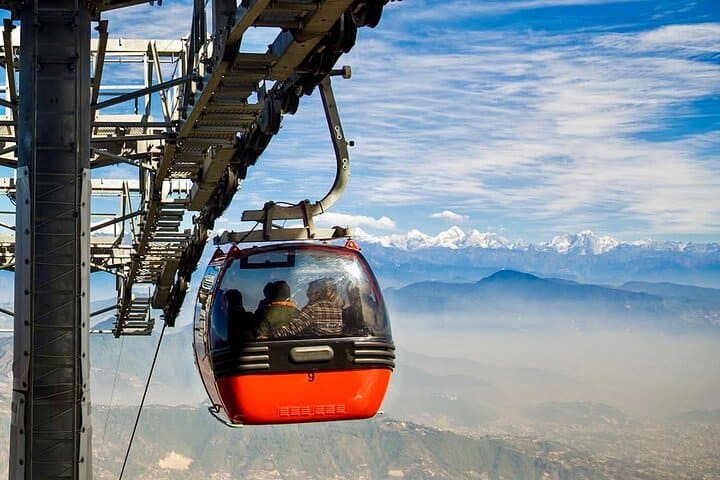
The Chandragiri Cable Car is one of Nepal's most impressive engineering attractions and provides one of the country's most scenic aerial journeys. Operating with modern gondolas equipped with large panoramic windows, the cable car carries visitors comfortably from the base station at Thankot to the hilltop station.
As the gondola climbs steadily through dense forests, passengers witness changing landscapes below, including terraced farmland, picturesque villages, green valleys, and the expanding skyline of Kathmandu. The peaceful ascent allows ample opportunities for photography and offers visitors an excellent introduction to Nepal's remarkable natural beauty before they even reach the summit.
BHALESHWAR MAHADEV TEMPLE
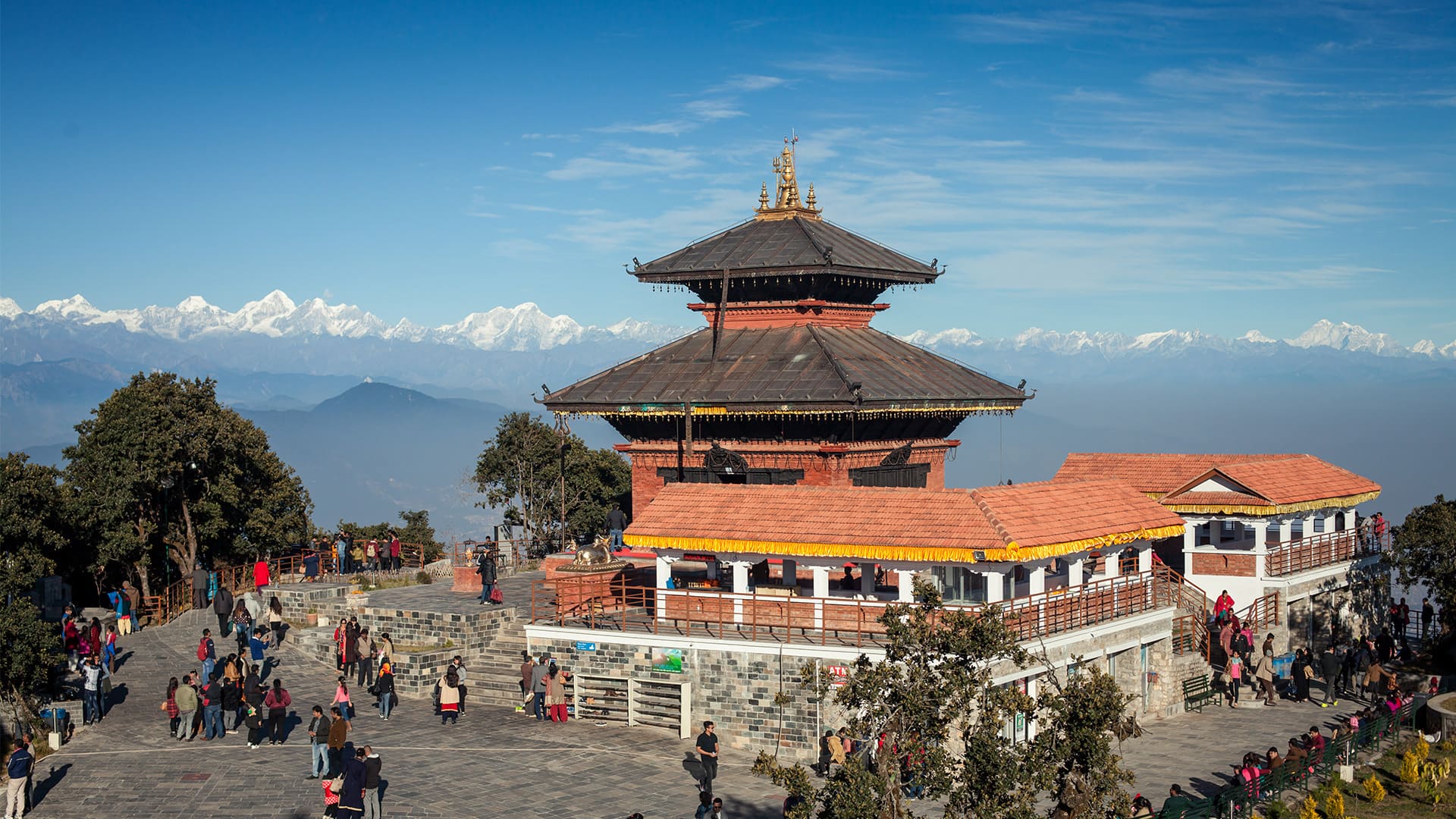
One of the principal attractions atop Chandragiri Hills is the sacred Bhaleshwar Mahadev Temple, dedicated to Lord Shiva. This beautifully constructed temple holds great religious importance for Hindus and is closely associated with ancient Hindu mythology.
According to legend, the temple marks the place where part of the head of Goddess Sati fell during Lord Shiva's cosmic dance following her death. As a result, Bhaleshwar Mahadev has become an important pilgrimage destination where thousands of devotees visit throughout the year to seek blessings, especially during religious festivals such as Maha Shivaratri.
The temple's elegant Nepalese architecture, peaceful prayer halls, beautifully decorated shrines, and tranquil atmosphere make it a wonderful place for both worship and quiet reflection. Visitors are welcomed by the soothing sounds of temple bells, devotional chants, fluttering prayer flags, and the fresh mountain breeze, creating a deeply spiritual experience.
PANORAMIC HIMALAYAN VIEWPOINT
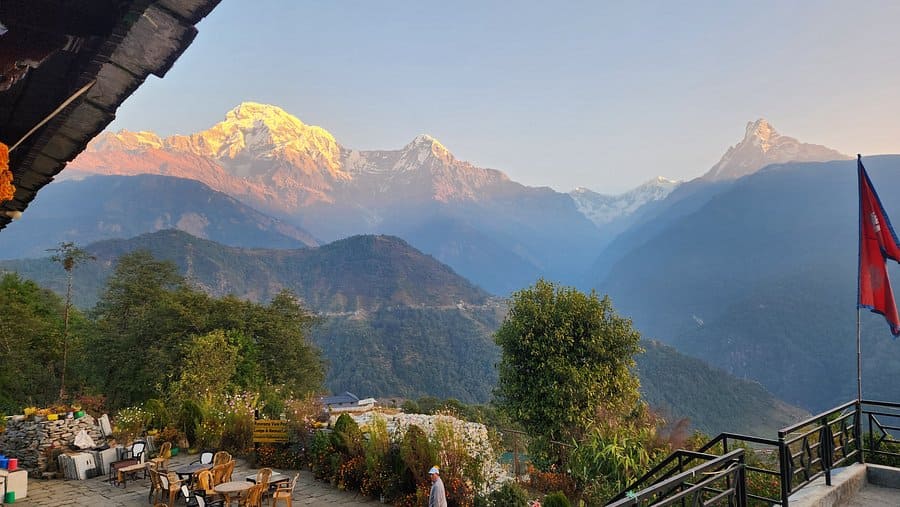
The summit of Chandragiri Hills offers one of the most magnificent panoramic viewpoints in Nepal. On clear days, visitors are rewarded with uninterrupted views of some of the highest mountains in the world stretching across the northern horizon.
Visible peaks may include:
- Mount Everest (distant view under exceptional weather conditions)
- Langtang Lirung
- Ganesh Himal
- Manaslu
- Annapurna Range
The observation platforms provide exceptional opportunities for landscape photography, sightseeing, and simply admiring the grandeur of the Himalayan mountain range. During sunrise and sunset, the snow-covered peaks often glow with golden hues, creating unforgettable memories for visitors.
NATURE WALKS & FOREST TRAILS
Surrounding the hilltop are peaceful walking trails winding through forests of pine, rhododendron, and oak trees. These well-maintained paths allow visitors to enjoy the fresh mountain air while observing the region's rich biodiversity.
Bird lovers may spot several native Himalayan bird species, while the tranquil environment offers a welcome retreat from city life. The landscaped gardens, colourful seasonal flowers, and scenic resting areas provide ideal places to relax, meditate, or simply enjoy the beauty of nature.
Throughout the trails, visitors encounter several viewing platforms offering ever-changing perspectives of the Kathmandu Valley and surrounding hills. Every corner presents excellent opportunities for photography and appreciation of Nepal's pristine landscapes.
ADVENTURE PARK
For visitors seeking excitement, Chandragiri Hills features a modern Adventure Park with activities suitable for families, groups, and thrill-seekers. The park offers a variety of outdoor attractions including zip-lining, sky cycling, skywalks, wall climbing, rope courses, horse riding, and children's recreational areas. These activities provide an exciting way to experience the hilltop while enjoying spectacular mountain scenery. The Adventure Park has become one of the most popular recreational attractions near Kathmandu, making Chandragiri Hills an excellent destination for visitors of all ages.